
How Florida's Sandy Soil Affects Concrete Foundations
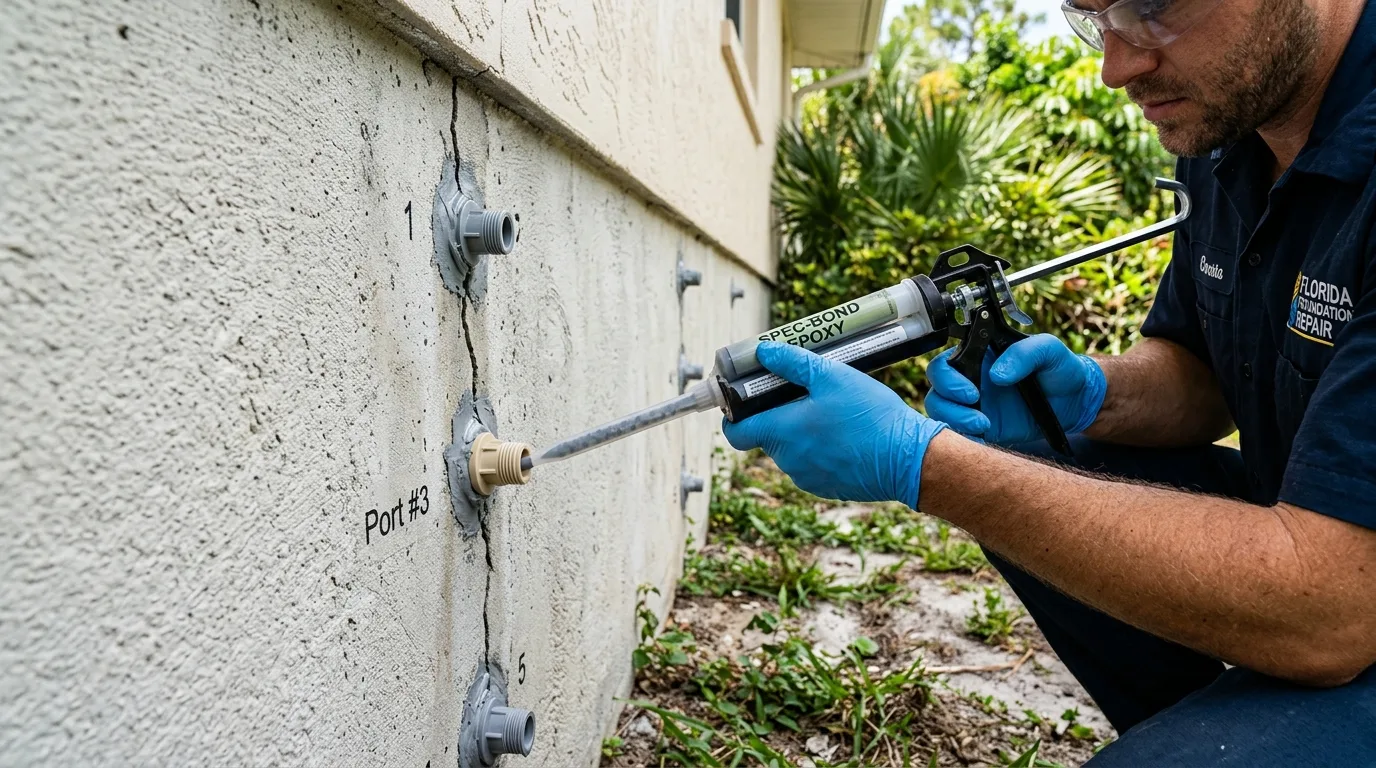
According to soil surveys for Osceola County, much of the land beneath Poinciana is classified as A-3 and A-2-4 fine sand — a poorly drained soil type with a high seasonal water table in the western part of the county. That single fact explains more about local concrete foundation problems than almost anything else. In this post, we cover what sandy soil means for foundation work, the warning signs of soil-related settlement, and how proper preparation prevents it.
Concerned About Foundation or Slab Settlement?
Get a free assessment for your Poinciana property.
Why Soil Composition Matters for Foundations
A concrete foundation or slab is only as stable as the ground beneath it. In most of the country, foundation problems trace back to expansive clay soils that swell and shrink dramatically with moisture. Poinciana’s challenge is different but no less serious — fine, poorly drained sand that shifts and loses bearing capacity as the water table rises and falls throughout the year.
Because sandy soil doesn’t hold its shape the way denser soils do, a foundation poured without proper compaction and a well-designed base can settle unevenly within just a few years, even though the visible signs might not show up immediately. This is why soil testing and proper site prep matter more in Poinciana than in many other parts of Florida. A contractor who treats every lot the same, without adjusting for these conditions, is more likely to deliver a foundation that underperforms relative to its design lifespan.
Types of Foundation and Slab Risk
Differential settlement: This occurs when one part of a foundation settles more than another, often creating visible cracks, uneven floors, or doors and windows that no longer close properly. It’s the most common sandy-soil-related issue we encounter on service calls.
Void formation: When sandy soil beneath a slab dries and contracts during Poinciana’s drier winter months, small voids can form beneath the concrete. The slab then has less support than it was designed for, increasing crack risk under normal load.
Erosion-driven settlement: Poor drainage that channels water beneath or alongside a foundation can wash out fine sand particles over time, gradually undermining the slab’s support — a slow process that often isn’t noticed until cracking appears.
Practical Warning Signs to Watch For
- Cracks wider than a quarter-inch appearing in a foundation wall or slab, especially diagonal cracks near corners.
- Doors or windows sticking or no longer closing flush, which can indicate the frame has shifted with foundation movement.
- Visibly uneven or sloping floors, noticeable when a level or marble placed on the floor rolls toward one side.
- Gaps forming between the foundation and exterior siding or trim, suggesting the structure has settled relative to the ground.
- Standing water near the foundation perimeter after rain, which accelerates the soil erosion that leads to future settlement.
How Proper Preparation Prevents Settlement
The foundation against sandy soil risk starts with a compacted base — typically several inches of crushed stone, mechanically compacted in layers, beneath any new slab or foundation pour. This compacted base distributes load more evenly across the sandy subgrade and resists the void formation that occurs in unprepared sand.
Drainage grading is equally important. Poinciana’s heavy May-through-October rainy season means a foundation perimeter needs positive slope and, in some cases, French drains or swales to direct water away from the structure rather than letting it pool and erode the supporting soil. We assess drainage conditions on every foundation and slab project before recommending a prep approach, since the right solution depends on the specific grading of each lot.
Protect Your Poinciana Property's Foundation
Schedule a free assessment with our concrete team.
Cost Factors for Foundation Work
Concrete slab and foundation work in this market generally falls within the broader $6–$16 per square foot decorative and structural concrete range used across Osceola County, though true structural foundation repair — including underpinning or significant soil stabilization — can run higher depending on the extent of correction needed. Most slab and footer projects also require a Slab-Only Permit through Osceola County, adding $50–$500 in permit fees depending on scope.
The cost difference between proper and inadequate base preparation is usually a few hundred to a couple thousand dollars upfront — a fraction of what full foundation repair costs years later if settlement is allowed to progress unaddressed.
Frequently Asked Questions
How do I know if my Poinciana home has a soil-related foundation issue?
Watch for the warning signs covered above — cracking, sticking doors, uneven floors, and gaps around trim. If you notice any of these, a professional assessment can determine whether the cause is soil settlement, normal slab curing cracks, or something unrelated like plumbing leaks.
Can sandy soil foundation problems be prevented entirely?
They can be significantly reduced with proper site prep, including compacted base material and correct drainage grading, but no foundation is entirely immune to soil movement. The goal is minimizing risk through proper installation rather than eliminating it completely, since soil conditions can shift over decades regardless of initial prep quality.
Do I need a permit for foundation repair in Poinciana?
Structural foundation repair work typically requires a permit through Osceola County, particularly if it involves breaking out and replacing slab sections or underpinning work. Cosmetic crack repair generally does not require a permit, but we confirm requirements during every assessment.
Get a Foundation Assessment for Your Poinciana Property
Call Poinciana Concrete Pros for an honest, professional evaluation.
Related: