
5 Signs Your Poinciana Driveway Needs Replacement
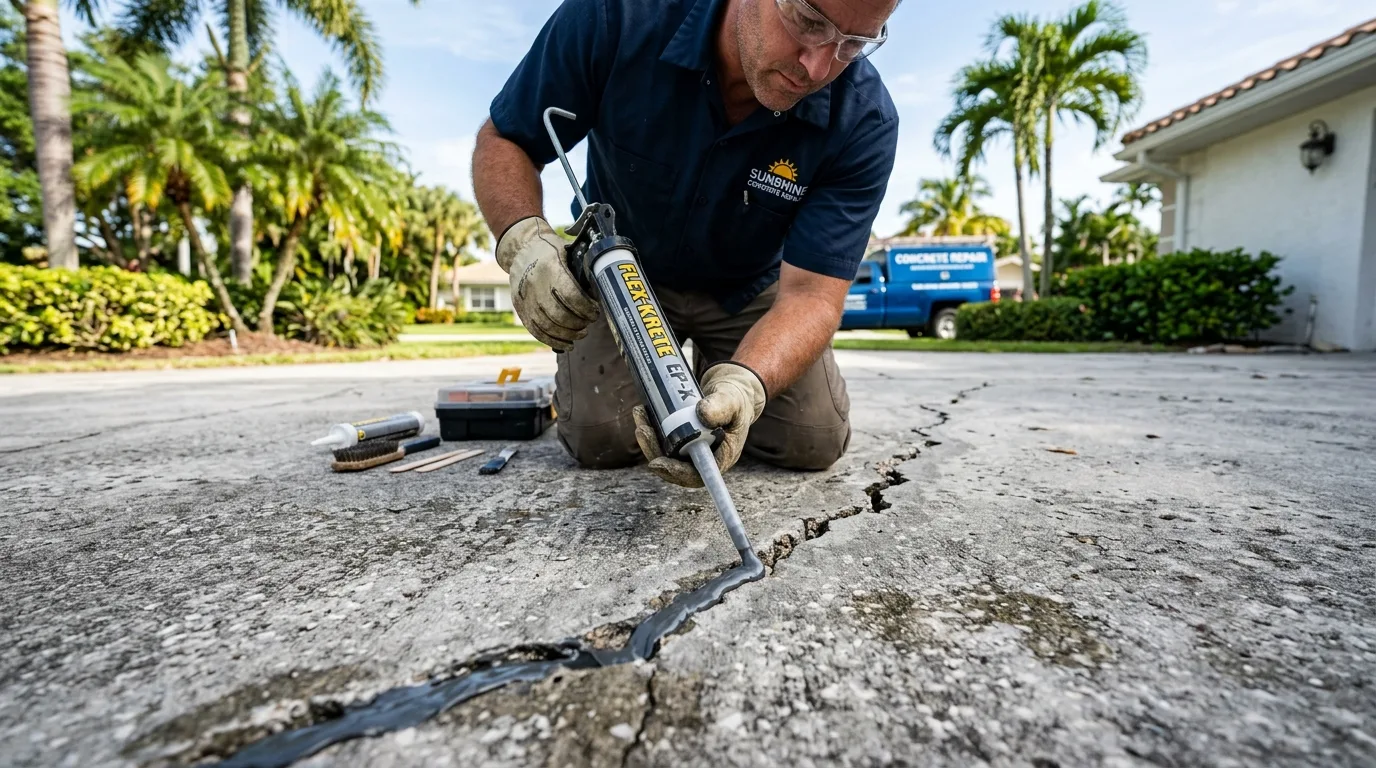
You’ve patched the same crack twice this year, and it’s already coming back. If that sounds familiar, your Poinciana driveway might be past the point where repair makes financial sense. In this post, we cover the five clearest warning signs that a driveway needs full replacement rather than another round of patching, and how to tell the difference before you spend money on a repair that won’t hold.
Not Sure If Your Driveway Needs Repair or Replacement?
Get a free, honest assessment from our team.
Why This Decision Matters for Poinciana Homeowners
Repair is almost always cheaper than replacement in the short term, which is why many homeowners default to patching cracks as they appear. But when damage stems from an underlying problem — like the soil settlement common throughout Osceola County’s sandy terrain — repeated patching becomes a cycle of diminishing returns, with each fix lasting a shorter time than the last.
Knowing when to stop repairing and start planning for replacement saves money over the long run and avoids the safety risks that come with an increasingly unstable driveway surface.
The 5 Warning Signs
1. Cracks covering more than 25% of the surface. A few isolated cracks are normal wear and tear suitable for repair. But once cracking spreads across a quarter or more of the total driveway area, you’re often looking at systemic base failure rather than isolated surface damage.
2. Multiple sunken or heaved sections. One small sunken corner might be fixable with mudjacking. Multiple sections settling unevenly across the driveway usually points to widespread sub-base erosion that repair alone won’t permanently resolve.
3. Repairs that fail within a year or two. If you’ve patched the same area more than once and it keeps reopening, the underlying cause — typically drainage or soil movement — hasn’t been addressed, and continued patching is essentially throwing money at a symptom rather than the problem.
4. The driveway is more than 25-30 years old with no major work done. Concrete’s typical 25-30 year lifespan in Florida’s climate means an older, unsealed driveway showing widespread wear is often more cost-effective to replace than to extensively repair.
5. Drainage problems causing chronic water pooling. If water consistently pools on or alongside the driveway despite grading attempts, the underlying base may have eroded enough that replacement with corrected drainage is the only durable fix.
How to Evaluate Your Own Driveway
- Check crack width and direction: Cracks wider than a quarter-inch or running diagonally from corners often indicate more serious structural movement than thin, straight hairline cracks.
- Look for a pattern across multiple visits: Take photos every few months — cracks that are visibly widening or new cracks appearing nearby suggest the problem is active, not stable.
- Test for rocking sections: Walk or drive slowly over different parts of the driveway; a section that flexes or rocks slightly indicates a void beneath the slab.
- Note where water collects after rain: Persistent pooling in the same spot after Poinciana’s frequent afternoon storms is a strong signal of drainage-related base erosion.
Why Osceola County’s Soil Accelerates This Decision
Poinciana sits on poorly drained, fine sandy soil with a high seasonal water table in much of western Osceola County. This soil type is more prone to the void formation and settlement that drives repeated repair failures than denser soil types found elsewhere in Florida. Driveways in older sections of Poinciana Villages, built before modern compaction standards were standard practice, are particularly likely to show the cumulative wear that points toward replacement rather than continued patching.
A driveway that’s repeatedly failing repair isn’t a sign of poor repair work — it’s usually a sign that the sub-base itself needs to be rebuilt, which only full or partial replacement accomplishes.
Get an Honest Repair vs. Replacement Assessment in Poinciana
We'll tell you the truth, even if it means recommending a smaller repair.
Cost Factors in the Decision
Isolated repairs typically run a few hundred dollars to a few thousand, while full driveway replacement runs $2,400–$10,800 depending on size and finish. The math tilts toward replacement once you’ve spent more than roughly a third of replacement cost on cumulative repairs that haven’t held — at that point, you’re often better off rebuilding the base correctly once rather than continuing to patch a failing foundation.
Demolition adds $2–$4 per square foot to a replacement project, but that cost is offset by not needing future repair visits for the same recurring problem.
Frequently Asked Questions
How do I know if my driveway crack is serious?
Cracks wider than a quarter-inch, cracks that are visibly growing, or cracks accompanied by uneven settling nearby are the clearest indicators of a serious problem. Thin, stable hairline cracks are typically cosmetic and don’t signal a need for replacement.
Is it cheaper to repair a driveway multiple times or replace it once?
It depends on the underlying cause. If repairs keep failing because the sub-base hasn’t been addressed, repeated patching often costs more over a few years than a single, properly executed replacement that fixes the root issue.
How long does driveway replacement take in Poinciana?
Most full driveway replacements take 3–5 days from demolition through finishing, plus the standard 28-day cure period for full strength, though the driveway is typically usable within about a week of the pour.
Get a Free Driveway Evaluation in Poinciana
Call Poinciana Concrete Pros for an honest repair vs. replacement assessment.
Related: