
Commercial Concrete Options for Poinciana Businesses
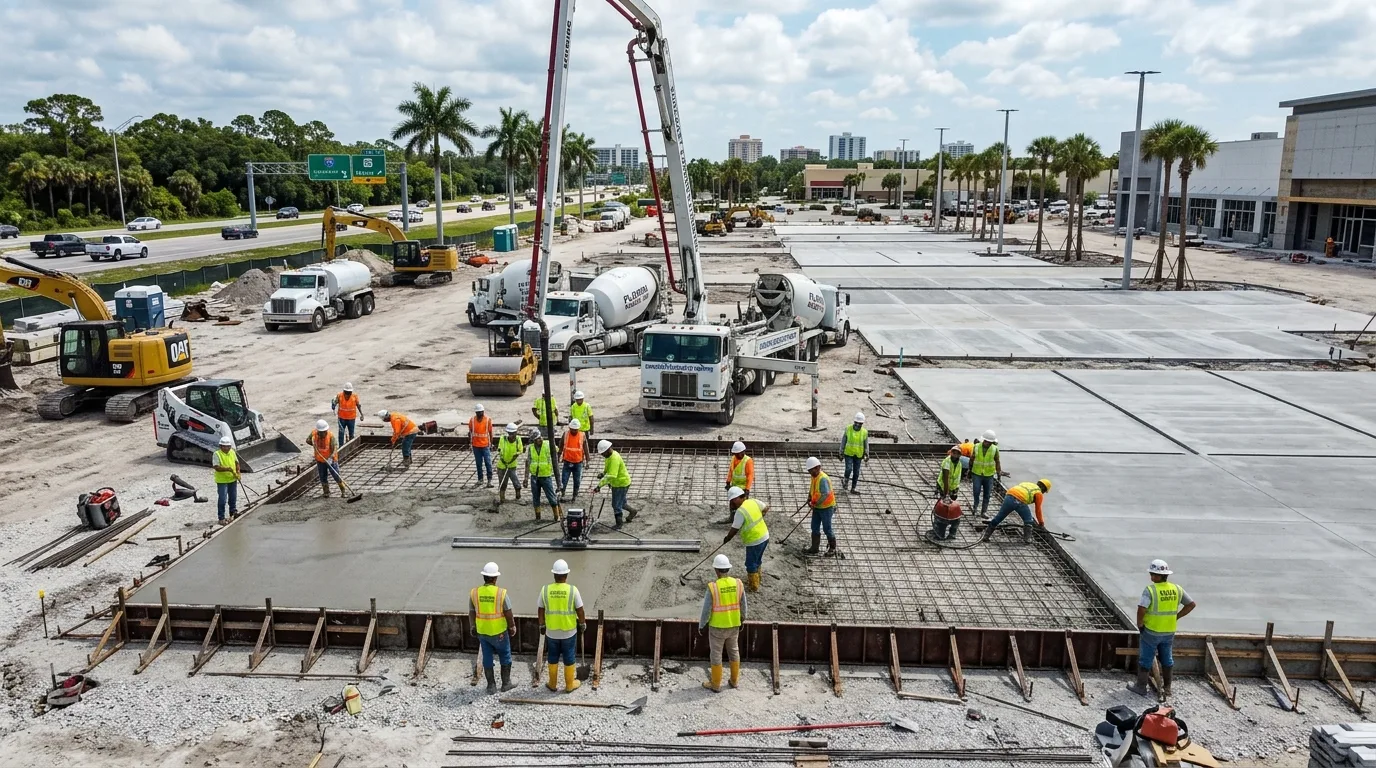
Osceola County’s commercial concrete permit review runs 2–4 weeks — nearly four times longer than the 3–5 business days for a residential slab permit. That single data point shapes how every commercial concrete project in Poinciana needs to be planned from the start. In this post, we cover the commercial concrete options available to local businesses, the permitting timeline differences from residential work, and what drives project costs.
Planning a Commercial Concrete Project in Poinciana?
Get a free consultation for your business property.
Why Commercial Concrete Differs From Residential Work
Commercial concrete projects in Poinciana — whether a retail parking lot, a warehouse loading dock, or a restaurant patio — face different structural demands than residential flatwork. Heavier vehicle loads, higher traffic volume, and in many cases stricter accessibility requirements under ADA standards all factor into design decisions that don’t apply to a typical driveway or patio project.
The permitting process reflects this added complexity. Commercial plan review in Osceola County takes 2–4 weeks compared to the 3–5 business days typical for residential slab-only permits, a timeline difference that should be built into any commercial project schedule from the outset. Business owners who fail to account for this longer review window sometimes find themselves with crews and equipment booked before approval comes through, which can force costly schedule changes elsewhere in the project plan.
Common Commercial Concrete Applications
Parking lots and drive aisles: Built with thicker, higher-strength concrete than residential driveways to handle sustained vehicle traffic and weight, often with specific drainage engineering to manage stormwater runoff per county requirements.
Loading docks and pads: Designed to handle concentrated point loads from heavy equipment and delivery vehicles, typically requiring reinforced concrete specifications well beyond residential standards.
Commercial walkways and entryways: Built to ADA accessibility standards where applicable, with specific slope, width, and surface texture requirements that differ from residential sidewalk specifications.
Equipment pads: Poured for HVAC units, generators, or other fixed equipment, often requiring precise leveling and load calculations specific to the equipment being installed.
Practical Planning Considerations
- Factor in extended permit timelines: Build the 2–4 week commercial review period into your project schedule well before construction is set to begin.
- Confirm ADA compliance requirements: Commercial walkways and entryways often have specific accessibility standards that residential work doesn’t need to meet.
- Plan for stormwater management: Larger commercial pours, especially parking lots, typically require drainage engineering to meet county stormwater requirements.
- Consider phased construction: For active businesses, phasing concrete work to maintain partial access or operations during construction can reduce business disruption.
How Local Conditions Affect Commercial Projects
Osceola County’s poorly drained, sandy soil presents the same fundamental challenge for commercial concrete as it does for residential work, but at a larger scale — a parking lot or loading dock pad covering thousands of square feet requires more extensive base compaction and drainage engineering to avoid the same settlement issues that affect smaller residential slabs. The stakes are also higher: a settling commercial parking lot creates liability concerns around trip hazards and vehicle damage that go beyond cosmetic wear.
Central Florida’s heavy rainy season from May through October means stormwater management is a central design consideration for any sizable commercial pour, not an afterthought — retention areas and proper grading need to be engineered into the project from the start to meet both functional and regulatory requirements. Businesses operating near Poinciana’s flatter, lower-lying sections often need more extensive retention planning than properties on higher ground elsewhere in Osceola County, which is something we evaluate during the earliest site visit rather than after construction has begun.
Get a Commercial Concrete Consultation for Your Poinciana Business
We help plan around permitting timelines and site requirements.
Cost Factors for Commercial Projects
Commercial concrete pricing generally scales with the broader decorative and structural ranges seen in this market, though large-scale parking lots and pads typically achieve a lower effective per-square-foot cost than smaller residential projects due to economies of scale in materials and labor. Smaller commercial pours, like a single equipment pad or short entryway walkway, don’t benefit from this scale advantage and should be budgeted closer to residential per-square-foot rates instead. The bigger cost variable for commercial work is often site engineering — stormwater management design, ADA compliance features, and structural load calculations add planning costs beyond the concrete pour itself.
Permit fees for commercial projects also run higher than the $50–$500 typical for residential slab-only permits, reflecting the more extensive plan review process commercial work requires. If you’re weighing whether a project needs repair versus a full new pour, our driveway repair vs. replacement guide covers the same decision framework that applies to larger commercial surfaces.
Frequently Asked Questions
How long does a commercial concrete permit take in Osceola County?
Commercial plan review typically takes 2–4 weeks, significantly longer than the 3–5 business days for residential slab-only permits. This timeline should be factored into any commercial project schedule from the planning stage.
Does commercial concrete need to meet different standards than residential?
Yes — commercial projects often require higher PSI concrete strength for vehicle and equipment loads, specific ADA accessibility compliance for walkways and entryways, and engineered stormwater management that residential projects typically don’t need.
Can commercial concrete work be phased to minimize business disruption?
In many cases, yes. Phasing construction to maintain partial parking access or operational areas during the project is a common approach for active businesses, though it requires more detailed project planning than a single continuous pour.
Discuss Your Commercial Concrete Project
Call Poinciana Concrete Pros to plan your business property's concrete work.
Related: