
Concrete Walkways and Sidewalks for Poinciana Neighborhoods
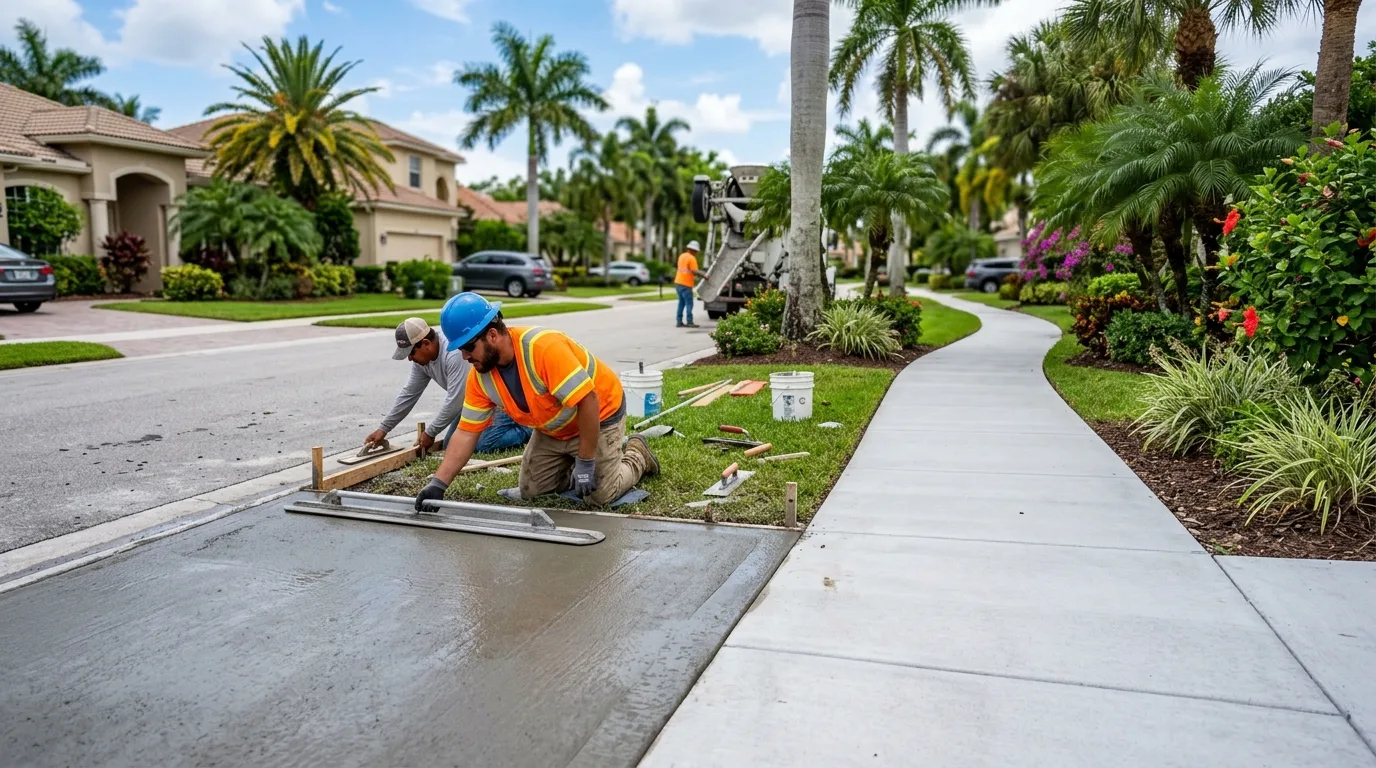
Picture a smooth, even walkway connecting your driveway to the front door — no cracks to trip over, no puddles to dodge after a storm. That’s the end goal of most sidewalk projects in Poinciana, but getting there means navigating a few neighborhood-specific factors most homeowners don’t think about until they’re mid-project. In this post, we cover what shapes walkway projects across Poinciana’s different communities, from HOA design standards to tree root management.
Plan Your Poinciana Walkway Project
Get a free estimate for new or replacement sidewalks.
Why Neighborhood Context Matters for Walkway Projects
Poinciana spans a wide range of community types — from the master-planned, HOA-governed sections of Poinciana Villages to established areas with mature tree canopy near Lake Marion Village. Each context brings different practical considerations to a sidewalk or walkway project, from design approval requirements to root intrusion risk that simply doesn’t exist in newer construction.
Understanding which factors apply to your specific neighborhood before starting a project helps avoid delays and unexpected costs once work is underway. A contractor who’s worked across several different Poinciana neighborhoods will typically flag these issues during the initial site visit rather than discovering them mid-project, which keeps the timeline and budget on track.
Sidewalk Considerations by Context
HOA-governed communities: Many sections of Poinciana Villages require design approval for visible walkway changes, even relatively minor ones. Submitting plans before scheduling work avoids the cost and hassle of redoing a completed project that doesn’t meet community standards.
Established neighborhoods with mature trees: Areas with significant tree canopy, common near older parts of Poinciana, face a higher risk of root intrusion lifting or cracking walkway sections over time, requiring careful route planning around existing root systems.
Newer construction areas: Sections of Poinciana built in recent years typically have fewer root-related concerns but may have stricter, more uniform HOA design guidelines governing walkway materials and finishes.
Drainage-challenged lots: Low-lying properties, more common in parts of western Osceola County with a higher water table, need careful grading to prevent walkways from becoming water channels during heavy rain.
Practical Planning Steps
- Check HOA requirements first: Before getting quotes, confirm whether your community requires design approval for sidewalk or walkway changes, since this can affect both timeline and material options.
- Map nearby tree roots: If mature trees sit near the planned route, have a contractor assess root proximity before finalizing the path to avoid future heaving.
- Plan for proper slope: Even a narrow walkway needs correct grading to direct water away rather than creating a channel that erodes the base over time.
- Consider connecting multiple areas: Combining a front walkway with a side-yard connector or patio access path in one project often reduces per-square-foot costs through shared mobilization.
- Walk the route at different times of day: Checking how water flows across the planned path during and after a rain event reveals drainage patterns that aren’t obvious on a dry afternoon.
How Local Conditions Shape the Build
Poinciana’s poorly drained, fine sandy soil affects sidewalks the same way it affects larger concrete surfaces — without proper base compaction, narrow walkways are actually more prone to uneven settling between sections than wider slabs, since there’s less surface area distributing the load. This is especially relevant for walkways crossing variable terrain, where one section might sit on more stable ground than another.
Central Florida’s heavy May-through-October rainy season also means any walkway built without proper drainage planning risks becoming a water channel during storms, eroding the base from underneath over time and accelerating the kind of settlement that leads to repair calls within just a few years. This is especially relevant for connector walkways running between two structures, where the slope has to balance drainage needs on both ends rather than simply sloping away from a single building.
Build a Walkway That Lasts in Poinciana
Get a free estimate tailored to your neighborhood's conditions.
Cost Factors for Sidewalk Projects
Concrete sidewalks and walkways in this market run $6–$10 per square foot, with a typical 100 square foot walkway costing roughly $600–$1,000, though most jobs carry a minimum project charge of $1,500–$3,000 given mobilization costs for smaller pours. Tree root removal, where needed, adds to project cost but is often less expensive than dealing with repeated heaving damage from roots left in place.
Combining a sidewalk with a larger driveway or patio project in the same visit typically reduces overall per-square-foot costs, since equipment and crew time are shared across the combined scope.
Frequently Asked Questions
Do I need HOA approval for a sidewalk in Poinciana?
Many sections of Poinciana Villages and other master-planned communities require design approval for visible walkway changes. Check your specific HOA’s architectural review requirements before scheduling work to avoid needing to redo a completed project.
How do you prevent tree roots from damaging a new walkway?
Options include rerouting the walkway path around major root systems, installing root barriers along the planned route, or in some cases removing problematic roots before pouring — the right approach depends on the specific trees and their proximity to the project.
How long does a typical sidewalk project take in Poinciana?
Most residential sidewalks take 1–2 days to install, including base prep and pouring, though longer or more complex walkways connecting multiple areas of a property may take 3–4 days.
Get Your Free Sidewalk Estimate
Call Poinciana Concrete Pros for walkway projects across all Poinciana neighborhoods.
Related: