
Preparing Your Poinciana Home for a Concrete Project
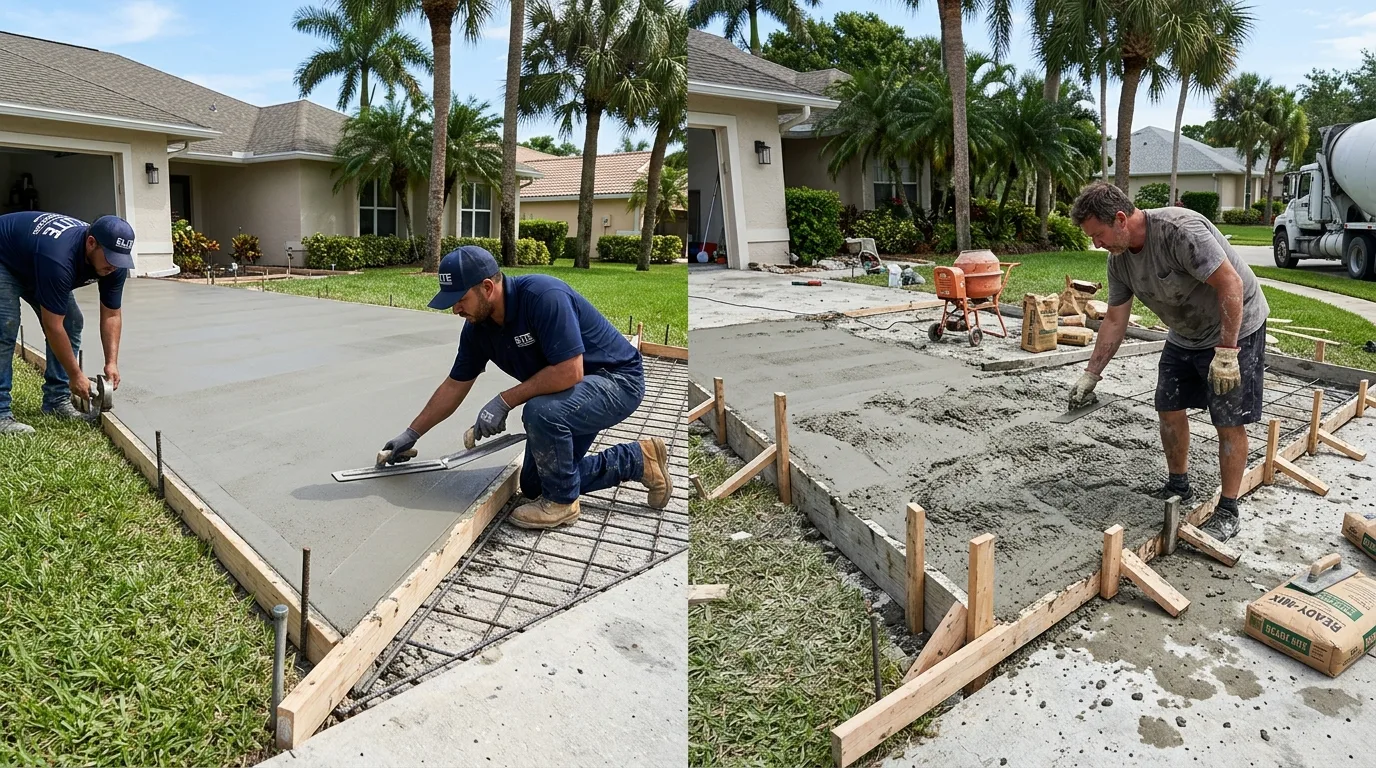
Picture pour day arriving smoothly — permits in hand, the work area clear, and the crew able to get straight to work without delays. That outcome isn’t luck; it’s the result of a few preparation steps most homeowners don’t think about until their contractor mentions them at the last minute. In this post, we cover the practical checklist that gets your Poinciana property ready for a concrete project, from permits through pour day.
Get Your Poinciana Project Off to a Smooth Start
We'll walk you through every prep step before work begins.
Why Preparation Matters for a Smooth Project
A concrete project that starts with proper preparation tends to run on schedule, while one that doesn’t often hits delays — a permit that wasn’t pulled in time, landscaping blocking equipment access, or irrigation lines that weren’t marked before excavation began. None of these issues are difficult to avoid, but they require planning before the crew shows up, not on the day they arrive.
Good preparation also protects your budget. Unexpected delays or damage to landscaping and utilities during a project can add unplanned costs that proper upfront planning would have avoided entirely. Most of these issues are entirely preventable with a single conversation between the homeowner and contractor before equipment ever arrives on site.
Pre-Project Checklist Categories
Permitting: Confirm whether your project needs an Osceola County Slab-Only Permit and, if a contractor isn’t handling it for you, submit applications early given the 3–5 business day residential review timeline.
Site access: Clear vehicles, furniture, or stored items from the work area, and confirm there’s adequate clearance for concrete trucks and equipment to reach the site without damaging landscaping.
Utility marking: Have buried irrigation lines, low-voltage lighting cables, or other utilities marked before excavation begins to avoid accidental damage during base preparation.
HOA approval: If your community requires design review for visible changes — common throughout sections of Poinciana Villages — submit plans early enough that approval doesn’t delay your scheduled start date.
Practical Steps Before Pour Day
- Clear the work area completely: Remove vehicles, potted plants, outdoor furniture, and any stored materials from the project footprint and the equipment access path.
- Mark or flag sprinkler heads and irrigation lines: This helps the crew avoid accidental damage during excavation and base compaction.
- Confirm the weather forecast with your contractor: Especially important during Poinciana’s May-through-October rainy season, when pour scheduling often shifts around predicted storms.
- Plan for noise and access disruption: Concrete work involves equipment noise and limited driveway or yard access for several days — plan parking and daily routines accordingly.
- Review the finish and color selections in writing: Confirm stamped patterns, colors, or finish choices are documented clearly before the pour to avoid miscommunication on the day of work.
How Poinciana’s Conditions Factor Into Prep
Because much of Poinciana sits on poorly drained, sandy soil, proper preparation often includes a site assessment for drainage before work begins — identifying where water currently flows across the property helps the contractor plan grading that directs runoff appropriately once the new concrete is in place. This step matters more here than in areas with naturally well-draining soil, where drainage corrections are less often necessary.
Scheduling around Central Florida’s rainy season is another local-specific consideration. If your project timeline is flexible, planning for the October-through-March dry season reduces the chance of weather-related delays, though experienced local contractors manage summer pours regularly with early starts and contingency planning. Either way, building in a few extra flexible days around your target start date gives both you and the crew room to adjust without scrambling.
Start Your Poinciana Project With Confidence
We help you prepare every step before the crew arrives.
Cost Factors Tied to Preparation
Most preparation steps — clearing the site, marking utilities — don’t carry direct costs beyond your own time, but skipping them can lead to costly delays or repair work if equipment damages unmarked irrigation lines or landscaping. Permit fees ($50–$500) and any required Notice of Commencement for projects over $5,000 should be budgeted as part of your overall project cost from the start, not treated as a late addition.
Projects that start with clear site access and finalized design decisions also tend to avoid the change-order costs that come from mid-project scope adjustments, keeping your final bill closer to the original estimate.
Frequently Asked Questions
How far in advance should I prepare for a concrete project in Poinciana?
Start preparation at least 2–4 weeks before your planned start date, particularly if permitting or HOA approval is required, since both processes take time that should run in parallel with finalizing your contractor and design choices.
Do I need to do anything special to prepare for a summer rainy-season pour?
Beyond the standard prep checklist, summer projects benefit from extra schedule flexibility, since contractors may need to shift pour dates around predicted afternoon storms. Confirming your contractor’s weather contingency approach beforehand helps set realistic expectations.
What should I do with pets and children during a concrete pour?
Keep pets and children away from the work area entirely during excavation, pouring, and the initial cure period — fresh concrete and the equipment involved both present safety hazards, and uncured concrete can be damaged by footprints or paw prints before it sets.
Ready to Plan Your Poinciana Concrete Project?
Call Poinciana Concrete Pros for a free consultation and project checklist.
Related: